Visualization has become an essential tool for conveying clear and compelling data narratives in the modern world. Not only is it pivotal in research, but it's also extensively utilized in the business sector. This technique enhances storytelling, allowing people to grasp complex information easily and effectively.
This webpage is dedicated to visualizing key insights from a shopping trends dataset. It aims to provide a concise overview of customer demographics, purchasing behaviors, and other relevant trends, offering a clear and detailed picture of current shopping patterns and preferences.
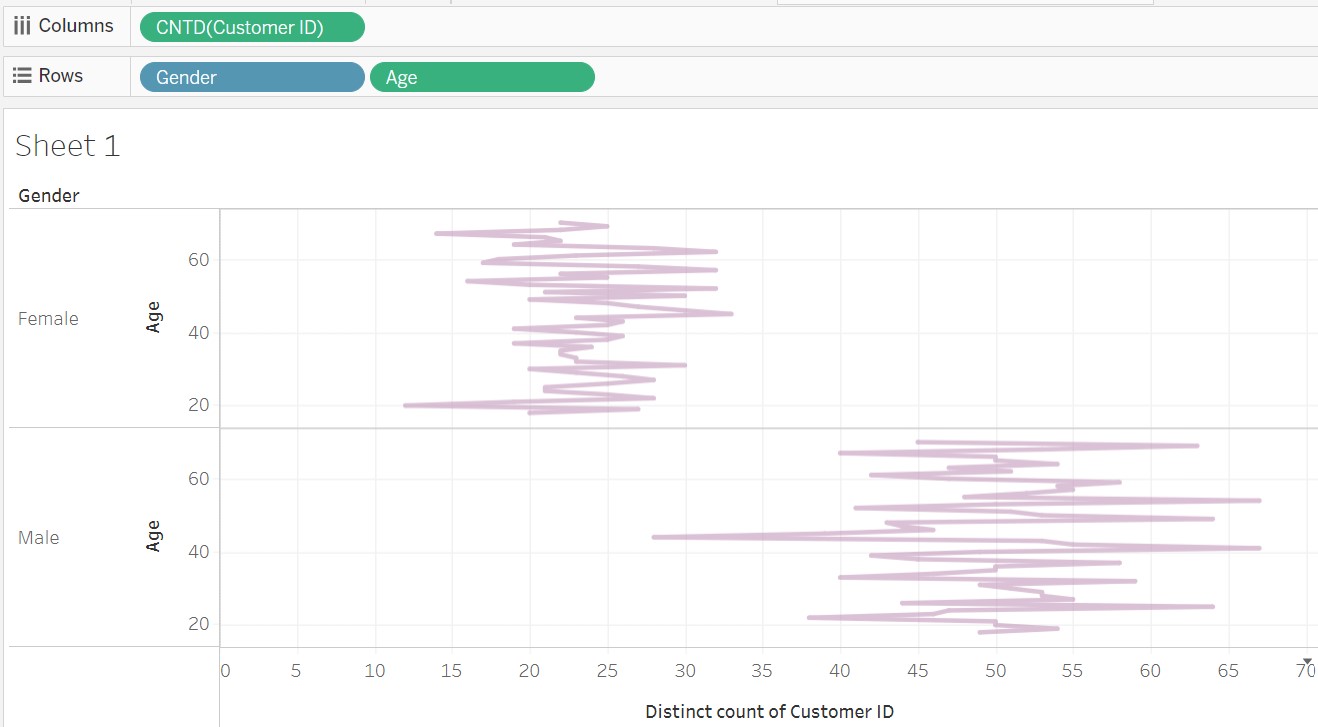
In the graph where we examine customer demographics, a distinct variation is evident between gender distribution and age. Notably, the data reveals that the average age of female customers making purchases is younger compared to their male counterparts.
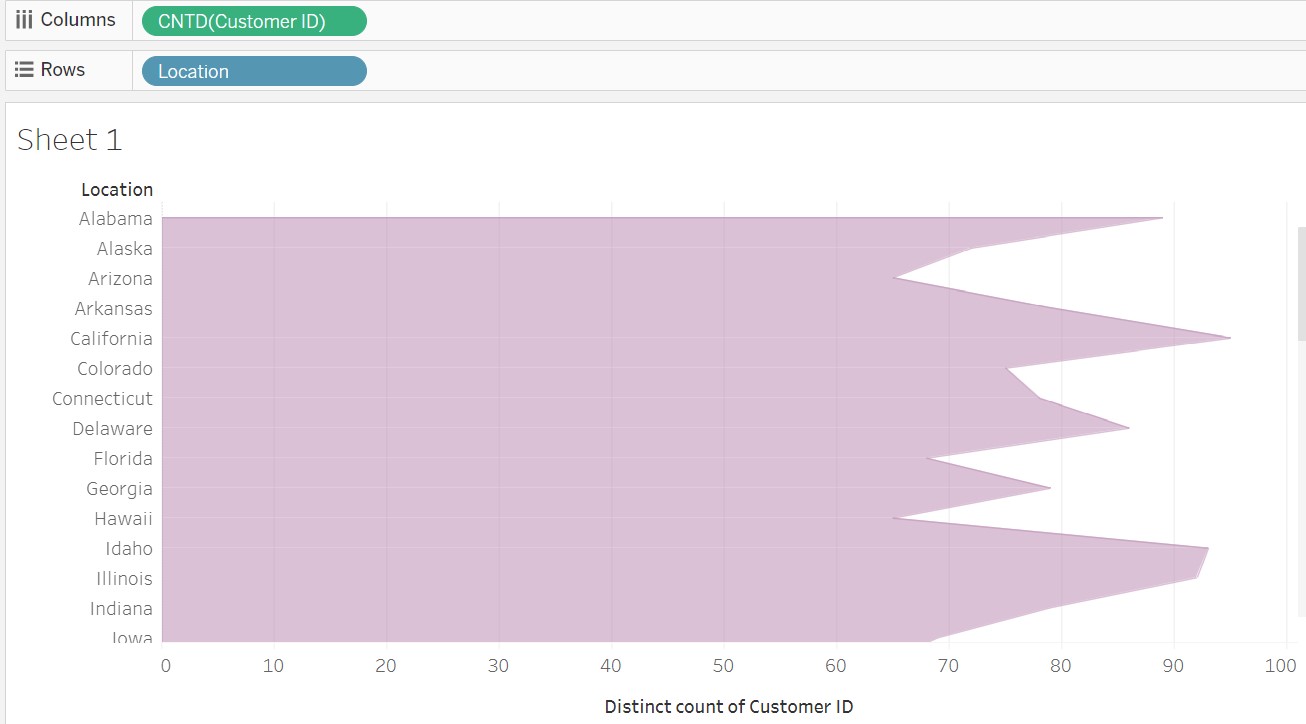
Following this, I created a Geographic Distribution graph, utilizing the Count Distinct method to identify regions where people are more inclined to purchase clothing. This visualization effectively highlights the areas with higher clothing sales.
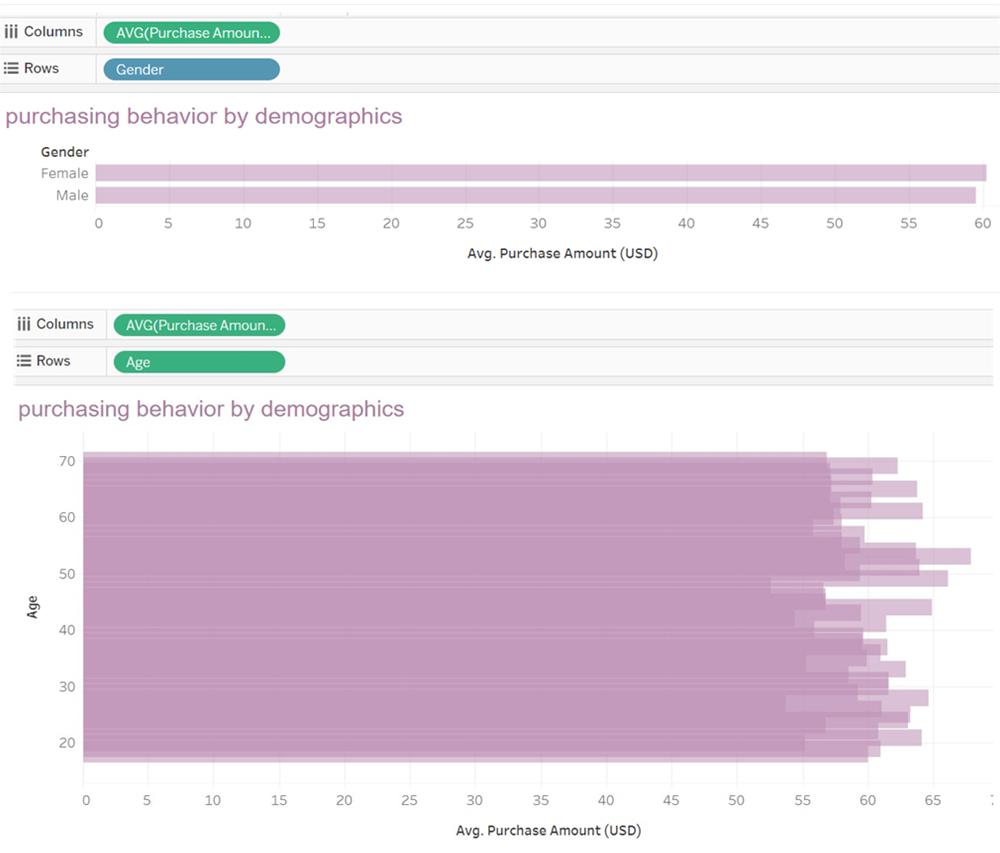
Next, I delved into Purchasing Behavior by Demographics, analyzing purchase amounts in relation to age and gender separately. This analysis revealed a subtle difference in spending habits between genders. Additionally, it was observed that the age group of 55 years old emerged as the predominant demographic in terms of purchasing.
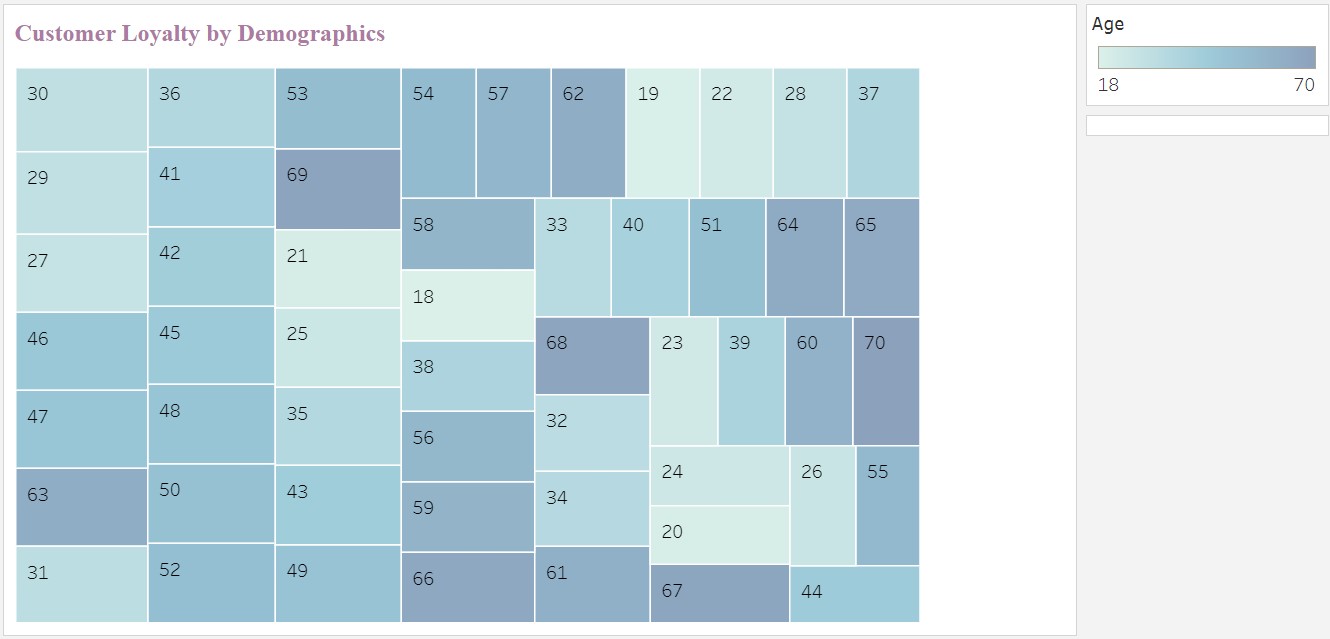
The final aspect of my analysis focused on Customer Loyalty by Demographics. For this, I used age and previous purchase frequency as key variables. This approach uncovered a trend suggesting that older customers tend to be more loyal, although this pattern is not distinctly pronounced.
The collected data and subsequent analyses paint a detailed picture of the shopping behavior and preferences among different customer groups. Gender and age play significant roles in purchasing patterns, with younger females and the 55-year-old age group being key demographics. Geographical trends suggest regional differences in clothing purchases, potentially useful for targeted marketing strategies. Finally, while older customers tend to show more loyalty, the correlation is subtle and warrants further investigation to understand loyalty drivers. These insights can guide more tailored marketing efforts, product development, and customer engagement strategies.